
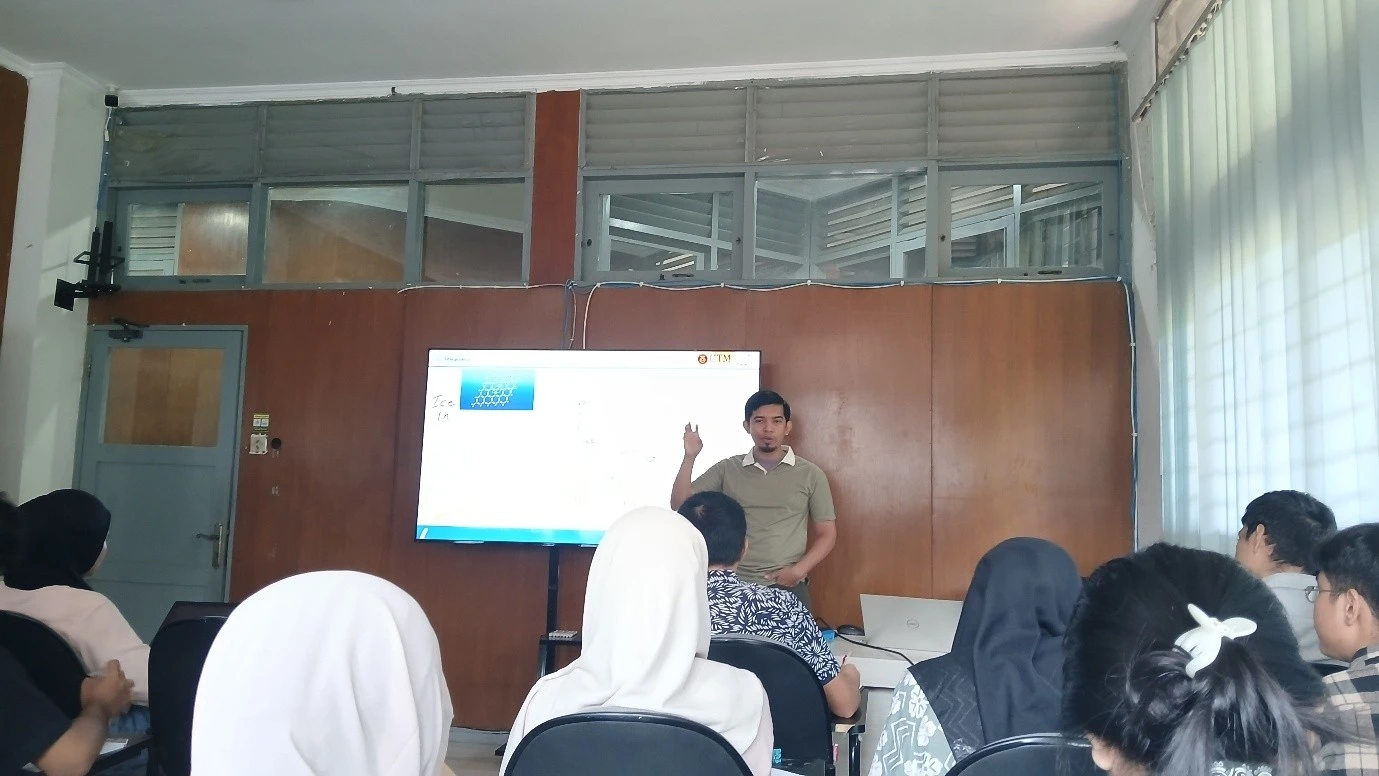
Nanomaterial characterization is the study of the physical, chemical, optical, and structural properties of nano-sized materials after they are synthesized. The topic was presented in an international lecture of Undip Global Classroom on Thursday, September 3, 2026, by Dr Muhammad Firdaus bin Omar from Universiti Teknologi Malaysia.
International Lecture on Nanomaterial Characterization at Undip
Undip Global Classroom, or UGC, is Diponegoro University’s effort to advance the internationalization of education by hosting academics from universities abroad. In this session, Dr Firdaus delivered a talk titled “Nanomaterial Characterization Techniques”. The event broadened students’ understanding of materials science and technology, especially research on nano-sized materials.
What Is Nanomaterial Characterization and Why It Matters
Dr Firdaus explained that characterization is needed to understand nanomaterials that have already been synthesized. Their physical, chemical, optical, and structural properties can differ from those of larger materials. The information helps researchers judge whether a material fits the goals of the research and the applications being developed.
Microscopy, XRD, and Spectroscopy Techniques
The material covered a range of analysis methods. Microscopy techniques, namely scanning electron microscopy (SEM) and transmission electron microscopy (TEM), can observe morphology, size, and particle distribution. X-ray diffraction (XRD), in turn, analyzes the crystal structure and phase of a material.
Spectroscopy was also discussed. Fourier-transform infrared spectroscopy (FTIR) studies functional groups, while UV-Visible spectroscopy (UV-Vis) studies optical absorption. The choice of method should match the type of nanomaterial, the information needed, and the research requirements. Using several techniques together gives a more complete picture.
Benefits for Undip Students and Researchers
Understanding these techniques is an important foundation for students and researchers who need to link the synthesis process to the properties of the resulting material. Accurate data supports the interpretation of research results, the evaluation of material quality, and the development of nanomaterials for many science and technology applications.
The presence of an academic from Universiti Teknologi Malaysia also opened an international perspective and created space to exchange knowledge with the Undip academic community. Through UGC, Undip hopes the event will raise academic competence, strengthen research culture, and open collaboration with universities in other countries.
Source: the event was organized by Diponegoro University. The program is explained in the Undip Global Classroom guide, and the partner campus is profiled at Universiti Teknologi Malaysia.